
Free standard freight to the 48 contiguous states

0

Guides

Make an informed choice

Practical guides to choosing a shed or a garage, sizing a boat lift or a dock, and receiving freight.

  • 4 guides
  • Short reads
All guides
Outdoor structures · 5 min read

Sheds, garages and greenhouses: size, material and the base
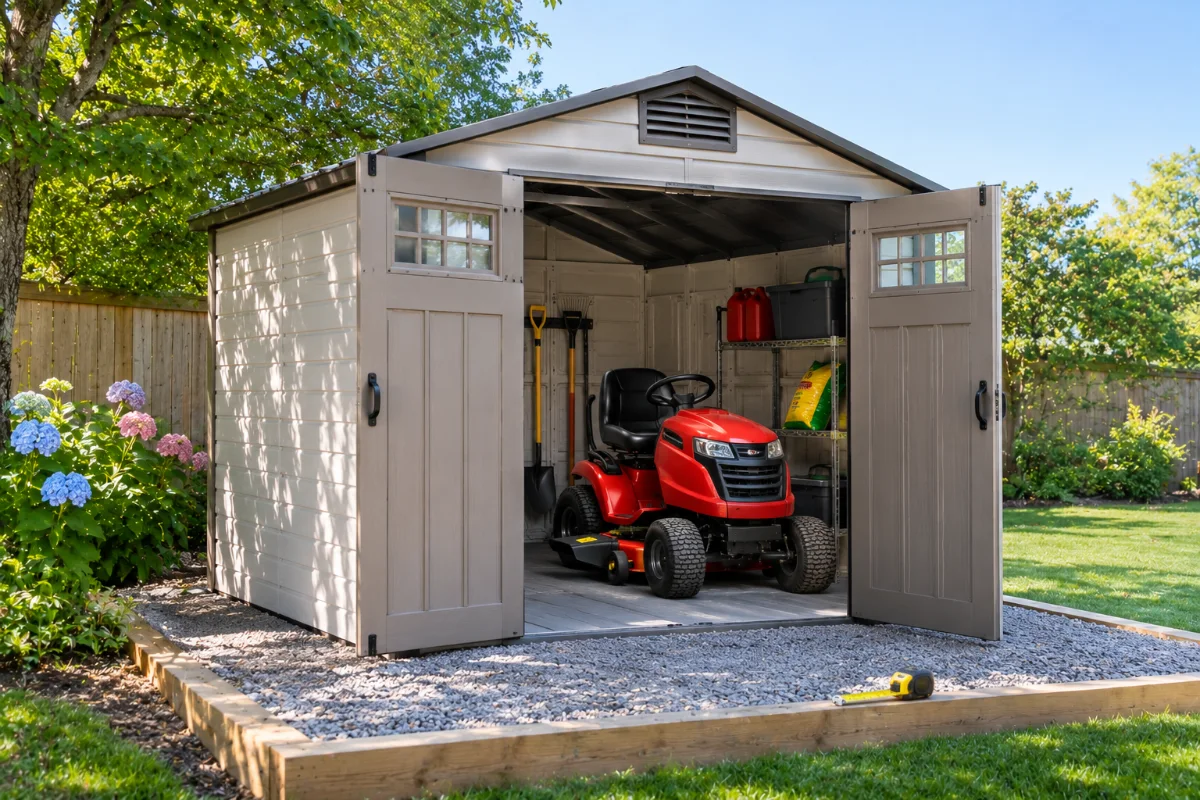
Three choices decide most of it: the size, the material and the base. Check the rules where you live before all three.

Rules first

Many towns let you put up a small shed without a permit, often up to 120 to 200 square feet, but ask for one for garages, carports, larger buildings and anything wired. Setbacks from property lines, height limits and HOA rules apply as well. Take the footprint and the height from the product page to your building department.

Size

  • Measure what goes in: a riding mower, bikes, a workbench, or a car with its doors open.
  • Check the door opening against the largest item, and leave room to walk around it.
  • For a carport, check the clear height at the sides against a truck, a camper or a boat on its trailer.

Material

  • Resin (polyethylene, polycarbonate): needs no paint and does not rot or rust.
  • Galvanized steel: strong for its price; anchor it well and keep the base dry.
  • Wood: easy to paint and to fit shelves to; it needs paint or stain and a base that keeps it off the ground.
  • Greenhouses: twin-wall polycarbonate spreads the light and holds heat better than a single pane; glass gives the clearest light.

Base and anchoring

Build a level base a little larger than the footprint: a concrete slab, pavers, or a compacted gravel pad in a timber frame, as the manual says. Anchor the building with the kit its maker lists, and check its wind and snow ratings, where they are published, against your area.

Questions about a size or a base: (401) 206-0312 (Mon–Fri 8 AM–5 PM Eastern).

All guides
Waterfront · 5 min read

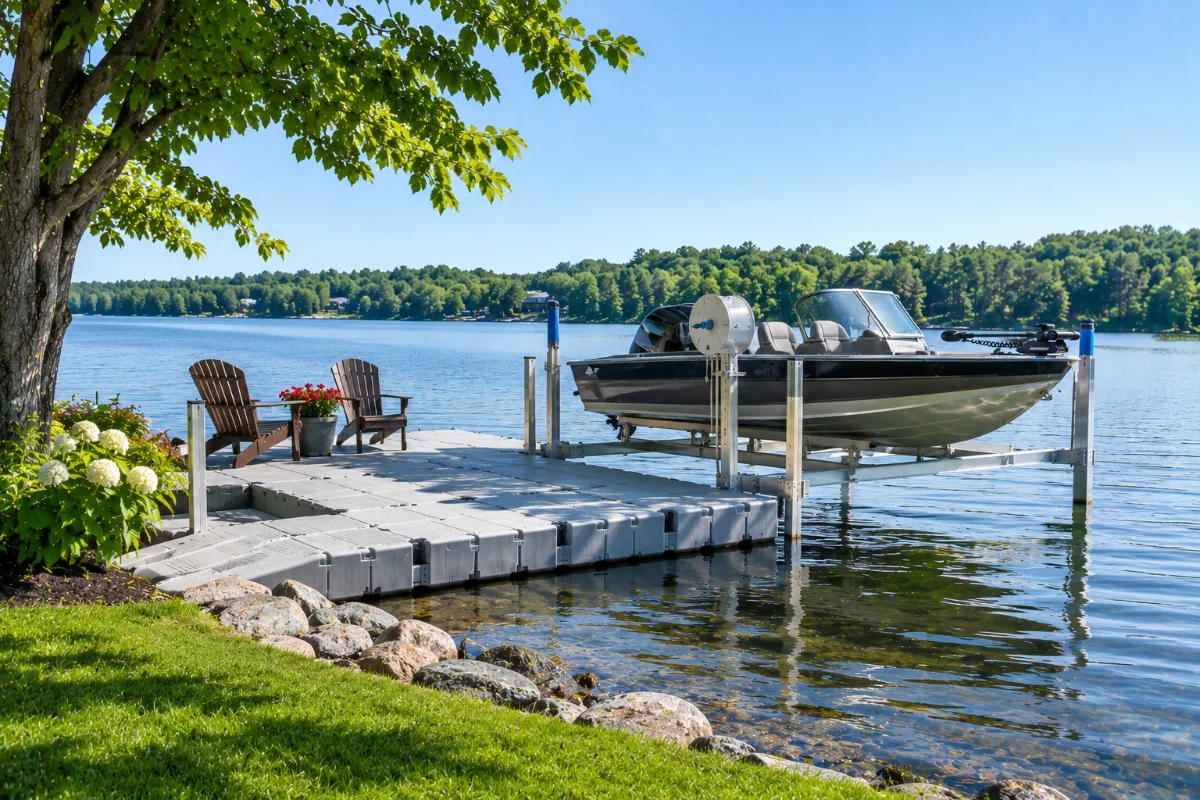
Boat lifts and docks: sizing by the boat and the water

A boat lift is sized from the boat; a dock, from the water. Have both sets of numbers ready.

The boat's weight

Start from the dry weight the boat's maker gives, then add the engine, the fuel (about 6 pounds a gallon), water, batteries and gear. Choose a lift rated above that total, with a margin.

The beam and the hull

Check the boat's beam against the lift's inside width, and the bunks or the cradle against the hull: V-hulls, pontoons and personal watercraft are carried differently.

The water

  • Freestanding vertical, hydraulic and cantilever lifts stand on the bottom: they need a firm bottom and a depth inside their range.
  • Floating lifts and drive-on ports suit deep water, soft bottoms and water levels that change.
  • Piling and seawall lifts hang from the pilings or the wall, which must be rated for the load.

Docks

A floating dock rises and falls with the water, so it suits a lake whose level changes; it is held with chains, posts or pipes. A gangway joins it to the shore and must be long enough for the slope at low water.

Permits

Docks and lifts are built in the water, and many need approval from your state or town and, on navigable waters, from the U.S. Army Corps of Engineers. Check before you order. Questions: (401) 206-0312 (Mon–Fri 8 AM–5 PM Eastern).

All guides
Delivery · 4 min read

Delivery day: receiving freight

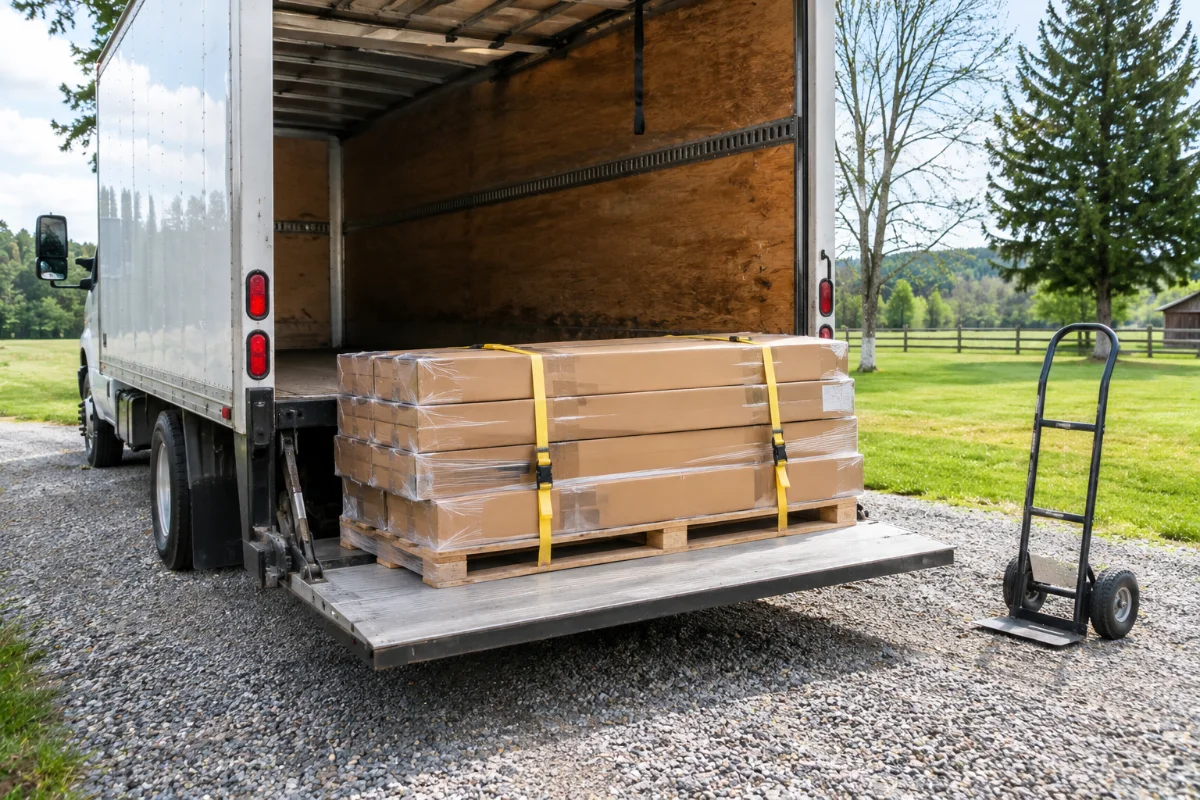
Free standard freight to the 48 contiguous states. Standard delivery takes 12–25 business days; Express: $480 per order · 5–15 business days. The carrier calls a day or two ahead to book a time.

Before the truck

  • Answer unknown numbers that week: the terminal calls the phone on your order.
  • Check that a 53-foot trailer can reach you, or tell us so the carrier can send a smaller truck.
  • Line up two or three helpers and a hand truck: structures arrive as kits in long, heavy boxes, and the driver leaves them at the curb. Keep panels flat and dry until you build.

At the curb

  • Walk around the pallet before you sign, and photograph every side.
  • Write any damage, a broken crate or a missing box on the delivery receipt, then sign.
  • Email the photos and your order number to contact@shedpierdepot.com within 24 hours; we file the claim with the carrier.

After

Keep the packaging until you have checked everything: a return goes back in the original packaging. Returns: Request a return within 15 days of delivery. Questions on the day: (401) 206-0312.

All guides
Ownership · 4 min read

Warranty, returns and everyday care

Warranty: One-year parts and labor warranty. Returns: Request a return within 15 days of delivery. Most problems are prevented by a few habits, and most claims are settled with one clear email.

Keep it working

  • Check and tighten fasteners and anchors once a season, and after every storm.
  • Clear heavy snow and fallen leaves from roofs, and keep gutters and vents open.
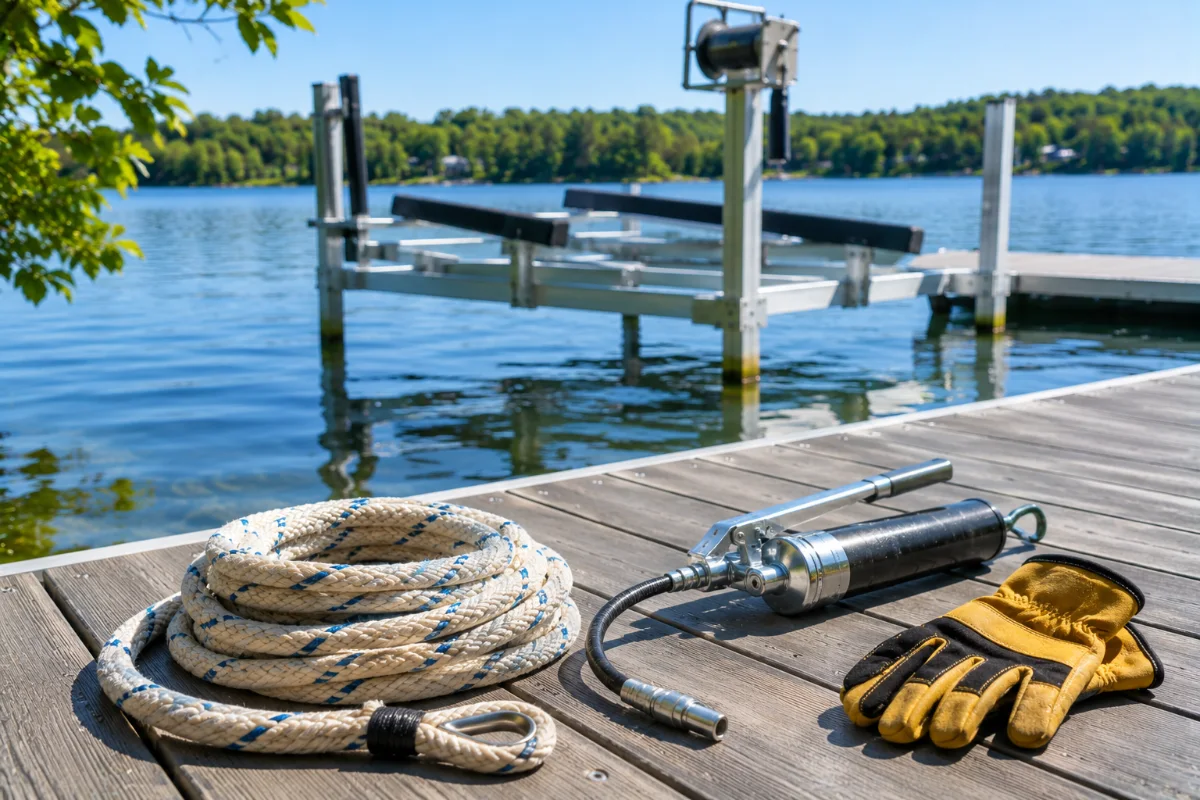
  • Rinse lifts and docks, grease what the manual lists, and check cables, bunks and floats before each season.

If something fails

Stop using the part that failed and make the area safe. Photograph or film the fault, the part numbers and the model or serial label. Email contact@shedpierdepot.com with your order number, the model and the serial number. A person replies within 1–2 business days.

Sending something back

Ask for a return authorization first, and send the item back unused, in its original packaging. If it arrived damaged, defective or wrong, we pay the return and refund or replace it.

Need a second opinion?

Tell us the job and we help you pick.

Questions? Call us(401) 206-0312Mon–Fri 8 AM–5 PM EasternEmail us